
January’s Full Wolf Supermoon and Weekend Skywatching Outlook
A bright start to 2026 for skywatchers
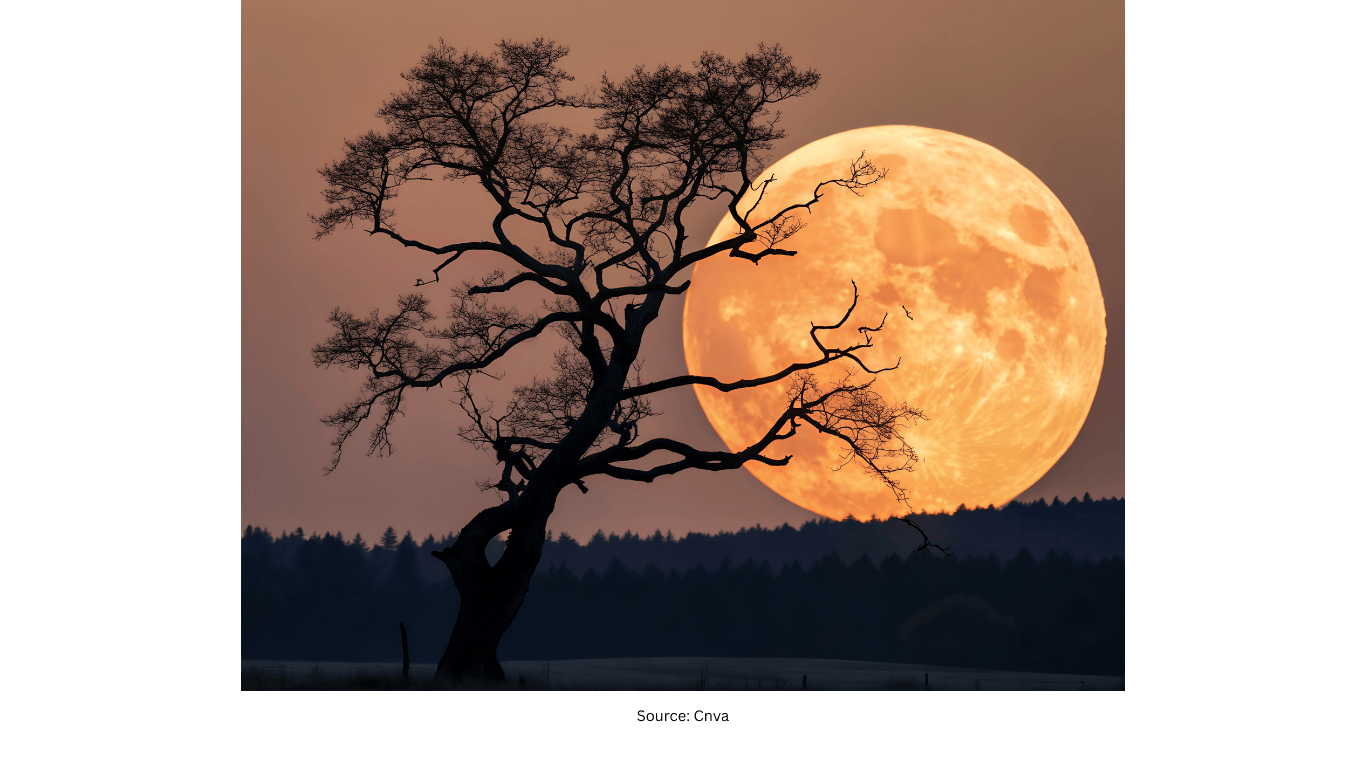
The New Year is bringing a notable weekend for anyone who enjoys looking up at the night sky. The first full moon of 2026 arrives as a supermoon—meaning it will appear bigger and brighter than a typical full moon because it coincides with the moon’s closest approach to Earth. Traditionally known as the “wolf moon,” this full moon is expected to stand out on its own, but it is also arriving during a weekend that includes a rare alignment and the peak of the Quadrantid meteor shower.
For many observers, the combination of a supermoon and a major meteor shower would sound like a perfect pairing. In practice, the moon’s brightness can make meteor viewing more difficult. Still, the weekend offers multiple reasons to step outside, whether the goal is to see the moon at its most dramatic or to catch any meteors that manage to shine through the glare.
Why the “wolf moon” will look larger and brighter
This weekend’s full moon is described as a supermoon because it will appear bigger and brighter than usual as the moon makes its closest approach to Earth. When the moon is closer, its reflected light appears more intense from our vantage point, and the lunar disk can look noticeably larger—especially to casual observers comparing it to a typical full moon.
In addition to the moon’s proximity, the weekend’s setup includes an extra factor that boosts how bright the full moon may seem. Earth will have reached perihelion, the point in its orbit when it is closest to the sun. With the sun slightly closer, the illumination available for the moon to reflect is stronger. Combined with the moon’s closer position to Earth, that reflection can appear more intense.
A rare alignment adds to the story
The weekend’s supermoon is also tied to a rare alignment involving the Earth, moon and sun. According to senior editorial writer Chris DeWeese, this particular alignment has not happened since 1912. That historical note is part of what makes the timing of this year’s first full moon especially interesting for skywatchers who follow celestial events closely.
While the alignment contributes to the moon’s enhanced brightness, it also creates a tradeoff for anyone hoping to see meteors at their best.
Quadrantid meteor shower peaks, but moonlight may interfere
The Quadrantid meteor shower is expected to peak on Saturday. It is often considered one of the most reliable meteor displays, but this year’s viewing conditions come with a major complication: the supermoon’s enhanced brightness is likely to wash out many of the shooting stars. In other words, the meteor shower is still peaking, but the sky may not be dark enough for the display to look as strong as it can under a darker moon phase.
For observers who still want to try, the best approach is to be realistic about expectations. The meteor shower may be active, yet only the brighter meteors may be visible through the moonlit sky.
When the full moon reaches peak fullness
For early risers, the wolf supermoon will reach its peak fullness at 5:20 a.m. Eastern on Saturday. That timing favors those who are willing to head outside before sunrise, particularly in locations with clearer skies.
However, some people may actually prefer viewing closer to dusk. As the moon rises against a darkening sky, it can create a striking effect that makes it appear especially large near the horizon. This is often when the moon looks most dramatic, even for viewers who are not tracking the exact moment of peak fullness.
Where skies may be clearest for viewing
Skywatching always depends on cloud cover, and this weekend is no exception. Senior meteorologist Jonathan Erdman notes that early Saturday, the clearest skies for viewing are expected from eastern Arizona, New Mexico and Texas northward into the High Plains of Colorado and western Kansas.
Erdman also points out that some partly cloudy skies are possible in parts of eastern New England before sunrise Saturday, which could still allow for glimpses of the moon depending on timing and local conditions.
Looking to Saturday night, Erdman explains that much of the nation’s mid-section—from Texas and the northern Gulf Coast to the Mississippi, Ohio and Tennessee Valleys—should have at least partly cloudy skies. Those conditions may be sufficient to get a good look at the supermoon, especially during breaks in the cloud cover.
Why this supermoon matters in the months ahead
January’s supermoon is notable not only for its timing and brightness, but also for what comes next. It is the fourth consecutive supermoon, and it will be the last one until November. For anyone who enjoys following lunar events through the year, that makes this weekend an important moment in the sequence.
Winter temperatures may discourage some people from spending time outside, but the weekend’s combination of a bright supermoon, a rare alignment, and a meteor shower peak provides a strong incentive to bundle up and take a look. Even if the moonlight reduces the number of visible meteors, the wolf supermoon itself is expected to be a standout sight.
Quick viewing checklist
Peak fullness: 5:20 a.m. Eastern on Saturday for those viewing early.
Dusk option: Moonrise near dusk can create a dramatic “large near the horizon” effect.
Clearest early skies: Eastern Arizona, New Mexico and Texas north into the High Plains of Colorado and western Kansas.
Partly cloudy possible: Parts of eastern New England before sunrise Saturday.
Saturday night outlook: At least partly cloudy skies across a broad mid-section from Texas and the northern Gulf Coast to the Mississippi, Ohio and Tennessee Valleys.
Meteor shower note: The Quadrantids peak Saturday, but the supermoon’s brightness is likely to wash out many meteors.