
Why Asia and the Pacific Often Sit on Tropical Cyclone Paths
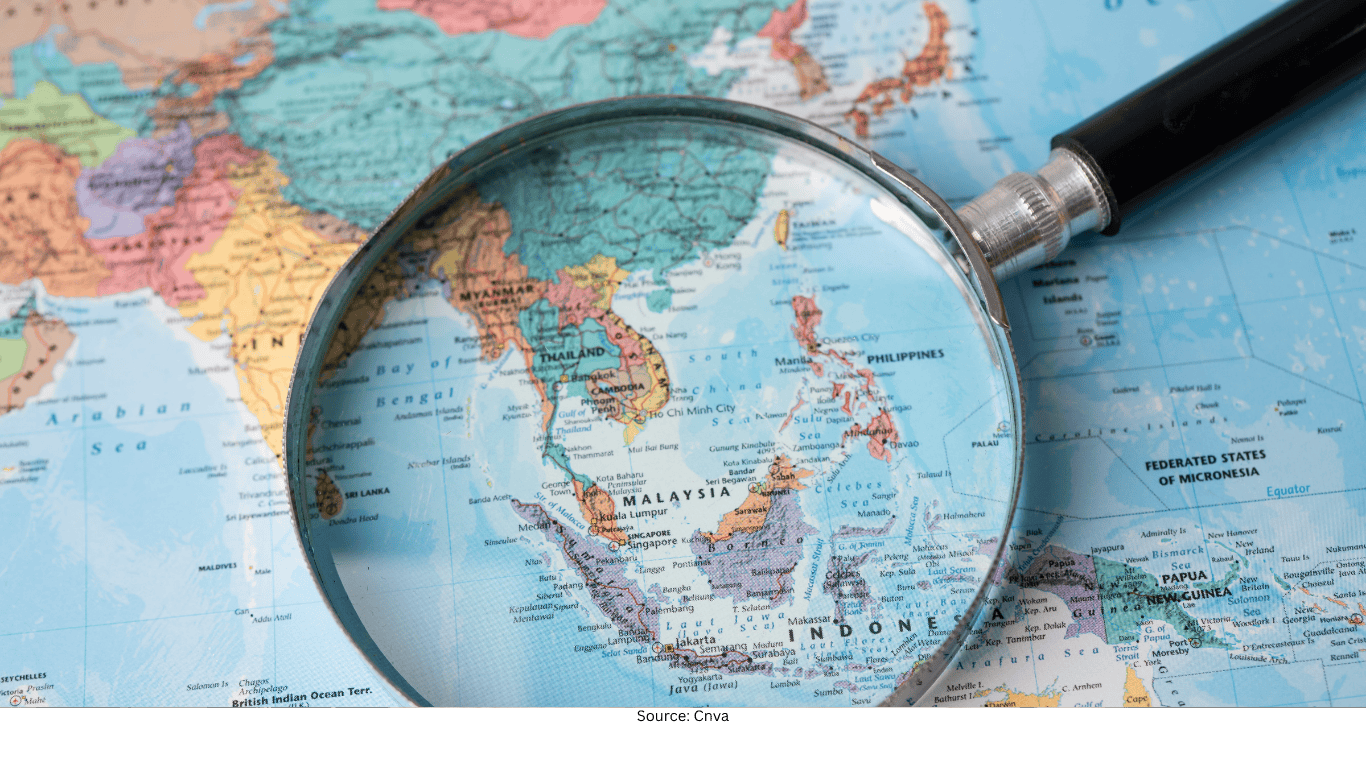
Recurring cyclone impacts across Asia and the Pacific
From year to year, tropical cyclones repeatedly affect countries across Asia and the Pacific. In recent weeks, cyclones in South Asia and Southeast Asia brought heavy rain and flooding that reportedly killed at least 1,800 people, displaced more than one million residents, and affected nearly 11 million. These figures underscore why the region’s cyclone exposure is often discussed not only as a meteorological pattern, but also as a continuing humanitarian and infrastructure challenge.
Several named systems were highlighted in the recent period. One cyclone, Ditwah, struck Sri Lanka and triggered landslides and floods described as the worst in the country’s recent history. Another, Koto, affected the Philippines and Vietnam. A third cyclone, Senyar, caused flooding and landslides across three countries.
Senyar drew particular attention because it formed in the Strait of Malacca, a narrow body of water between Malaysia and the island of Sumatra. Climatologist Fredolin Tangang—an emeritus professor at Universiti Kebangsaan Malaysia and a former vice-chair of a United Nations IPCC working group—described the phenomenon as highly unusual. According to NASA, it is only the second recorded case of a tropical cyclone forming in the Strait of Malacca.
Earlier in November, the Philippines was also hit by Fung-wong, described as the strongest cyclone to make landfall in the country during 2025. With a diameter reaching about 1,800 kilometers, it influenced 16 of the Philippines’ 18 regions, illustrating how a single system can have broad geographic reach even when the most intense impacts are concentrated in certain areas.
What a cyclone is—and why the names vary
A cyclone is a very large storm that forms over tropical waters. The terminology changes by region. In the Atlantic and the eastern Pacific, these storms are commonly called hurricanes. In East Asia they are known as typhoons. In the Indian Ocean and the South Pacific, the term “cyclone” is used, and it is also often used as a general label for tropical storms of this type.
Storm strength is also categorized. When wind speeds reach roughly 119 kilometers per hour or higher, a storm is officially classified as a tropical cyclone. Based on wind speed, cyclones are then grouped into Category 1, 2, or 3 using the Saffir–Simpson scale, as described in the provided material.
When cyclone seasons typically occur
Cyclone seasons differ between hemispheres. In the Northern Hemisphere, the cyclone season usually runs from June to November. In the Southern Hemisphere, it typically spans November to April. However, storms can still form outside these windows, which is one reason forecasters and disaster managers emphasize readiness beyond a strict calendar.
The essential ingredients for cyclone formation
Tropical cyclones form over warm tropical oceans, where sea temperatures are at least above 26 degrees Celsius down to a depth of around 60 meters. Sebastien Langlade, Head of Operations at the Regional Specialized Meteorological Center La Réunion (a French territory off the coast of East Africa), described warm sea-surface temperatures as the main “fuel” for cyclone formation.
Warm water alone is not enough. The atmosphere must also contain sufficient moisture. In addition, the direction and speed of winds from the sea surface up to altitudes of about 15–20 kilometers need to be relatively uniform. When winds at different heights vary too sharply, developing storms can be disrupted before they organize into a mature cyclone.
Latitude matters as well. Cyclones generally do not form too close to the equator because the Coriolis force there is too weak to generate the rotating structure needed for a cyclone’s circulation. As a result, cyclones typically form at latitudes greater than about 5 degrees.
How a cyclone develops from a low-pressure system
The development process begins with a low-pressure system that encourages warm, moist air to rise. When clusters of thunderstorms form within a warm low-pressure area, the system can intensify by drawing in more warm, moist air through evaporation from the ocean surface. As this air rises, it cools and produces more clouds, supporting further storm growth.
Langlade explained the underlying mechanism in energetic terms: a tropical cyclone can absorb energy from the ocean and convert it into wind and rain. In this view, the cyclone functions like a thermodynamic engine, powered by the heat and moisture available over warm tropical waters.
Hazards: wind, extreme rainfall, flooding, and storm surge
Strong winds are often the most visible danger, but tropical cyclones can also produce very heavy rainfall, severe flooding, and storm surge. Langlade described storm surge as a rise in sea level accompanied by large waves, which is one reason sea conditions become extremely dangerous when a tropical cyclone reaches high intensity.
The recent impacts described across South Asia and Southeast Asia—heavy rain, flooding, and landslides—reflect how cyclone hazards extend beyond coastal wind damage. Even inland areas can face serious risk when sustained rainfall saturates soils and overwhelms drainage systems.
Why Asia and the Pacific are frequently in cyclone corridors
Globally, there are seven regions that frequently experience tropical cyclones. Historically, the western North Pacific has been the most active area for cyclone formation. The Philippines sits in the middle of what is sometimes called a “typhoon belt,” averaging around 20 typhoons each year.
Langlade pointed to a record of cyclone tracks and described the area east of the Philippines, east of Taiwan, and south of Japan as one of the world’s hottest zones for cyclone activity. Many “super typhoons” form in this region, and in some seasons the number of cyclones can exceed 26. The underlying reason given is that both atmospheric conditions and sea temperatures there are highly supportive of storm development.
In broader global context, more than 70% of tropical storms form in the Northern Hemisphere. This distribution aligns with the prominence of major cyclone basins affecting Asia and the Pacific, including the western North Pacific and parts of the Indian Ocean.
Climate signals and shifting patterns
A study published in the journal Nature during the summer reported that recent global warming patterns have been “shifting the location of cyclone clusters from the western North Pacific to the North Atlantic.” This finding was presented as part of ongoing scientific efforts to understand how cyclone activity may be changing as the climate warms.
Tangang emphasized the broader principle: science shows clearly that the warmer the Earth becomes, the more extreme weather events can be. In the context of tropical cyclones, warmer oceans associated with human-driven climate change can contribute to stronger storms and higher-category systems.
According to the latest IPCC report referenced in the material, as the world continues to warm, the proportion of very intense Category 4 and 5 cyclones is expected to increase worldwide. Even if the overall number of cyclones does not rise, the impacts could become more severe, including higher wind speeds, larger storm surges, and increased rainfall. Langlade described this outlook as concerning.
Limits of intervention—and the importance of preparedness
The material states that there is currently no known way to stop or weaken a cyclone once it forms. That reality places greater weight on actions that reduce harm. Tangang argued that while typhoons cannot be avoided, their impacts can be reduced through systematic adaptation and through infrastructure such as flood-control measures.
Langlade agreed on the importance of preparedness and stressed that public readiness can fade when there are several years without a major cyclone threat. He noted that there are practical steps that can be taken at the start of cyclone season, such as trimming tree branches and clearing drainage channels so floodwater can flow rather than overflow.
Adaptation priorities and the wider climate challenge
Tangang said strengthening adaptive capacity—including improving flood-control efforts—is key to minimizing impacts. He also linked cyclone risk to the broader challenge of climate change, stating that global warming should be limited to below 1.5 degrees Celsius. To reach that goal, he said the world must act together and rapidly reduce greenhouse gas emissions.
Across Asia and the Pacific, the repeated experience of tropical cyclones highlights a consistent set of realities: warm tropical seas can provide the energy storms need; atmospheric conditions can steer where and when they form; and the hazards extend from wind damage to flooding, landslides, and storm surge. With recent events showing how widely cyclones can affect populations, the emphasis in the provided material remains on readiness, adaptation, and risk reduction—especially as scientific assessments warn that a warming world can intensify the most severe storms.
Key points at a glance
- Tropical cyclones form over warm tropical oceans, typically above 26°C to around 60 meters depth, with sufficient moisture and relatively uniform winds up to 15–20 km altitude.
- They usually do not form near the equator because the Coriolis force is too weak; formation generally occurs beyond about 5° latitude.
- The western North Pacific is historically the most active cyclone basin, and the Philippines lies in a “typhoon belt” averaging about 20 typhoons per year.
- Cyclones can bring dangerous winds, very heavy rain, flooding, landslides, and storm surge that raises sea level and produces large waves.
- Recent warming is associated with concerns about stronger cyclones and a higher share of very intense Category 4 and 5 storms, even if total storm numbers do not increase.
- There is no known method to stop or weaken cyclones; reducing impacts relies on preparedness, adaptation, and measures such as flood-control infrastructure and seasonal maintenance like clearing drains.