
A Photographer’s Conservation Project Helps Hermit Crabs Swap Plastic for Shells in Okinawa
From documenting wildlife to responding to a coastal problem
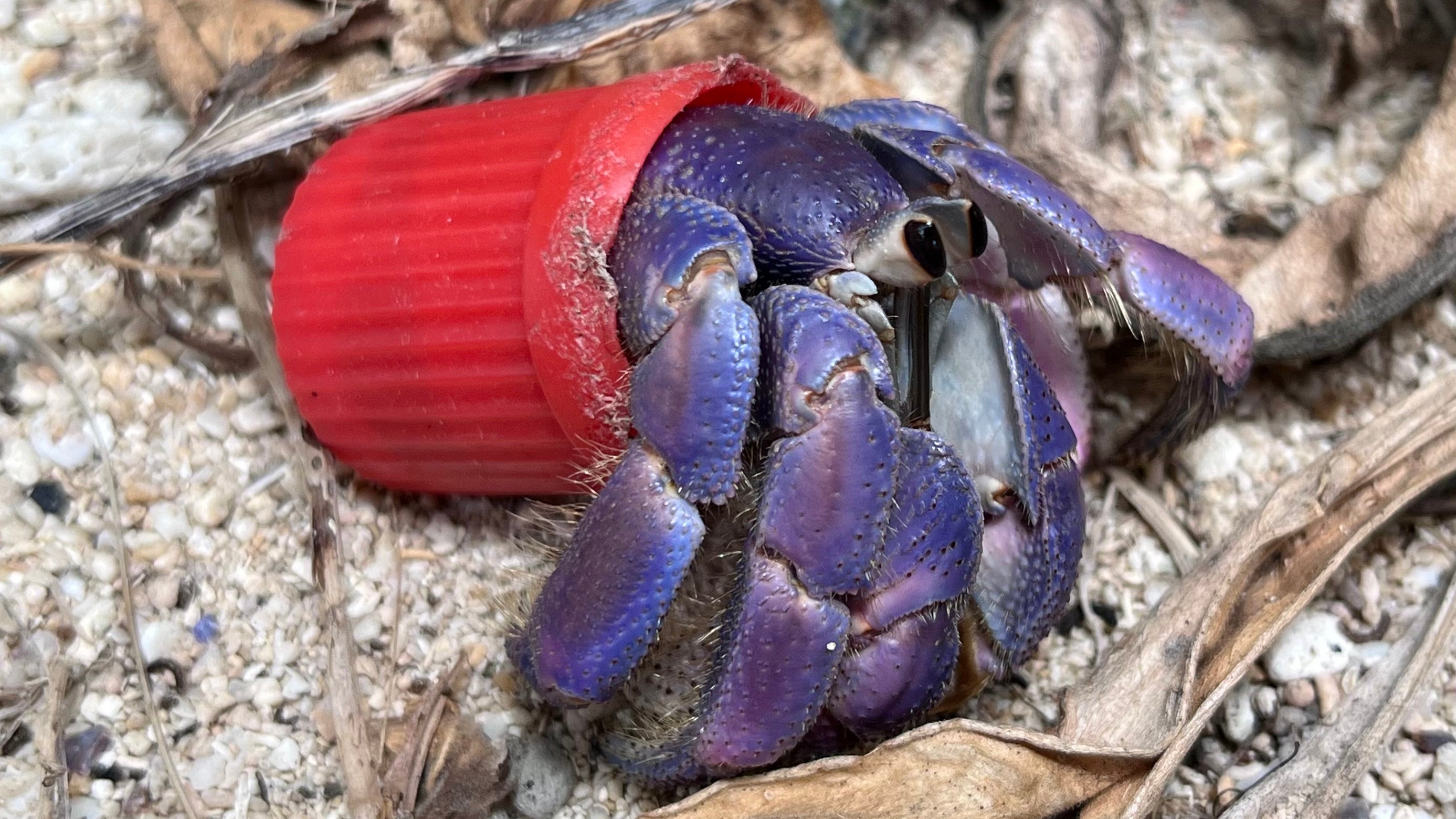
In 2010, wildlife photographer Shawn Miller encountered a scene on the shores of Okinawa, Japan, that changed the direction of his work. While photographing hermit crabs, he noticed that some were living in discarded plastic—especially bottle caps and other small pieces of waste—instead of natural shells. The discovery was striking not only because of the crabs’ ability to adapt, but because it pointed to a broader issue: beach pollution and a scarcity of seashells.
Miller recalls being impressed and amazed as he continued to find crabs using different types of caps from a range of products. What began as an unusual photographic subject became a sign of environmental degradation that felt too significant to simply record. Over time, he moved from observer to active participant, shifting his focus toward conservation.
Miller has lived in Japan for more than 25 years and has long documented the country’s wildlife. In Okinawa, the hermit crabs’ plastic “homes” became a clear example of how human litter can alter the natural choices available to animals. For him, the images raised a difficult question: what happens when the materials an animal depends on are replaced by trash?
Launching “Make the Switch 4 Nature”
In 2020, Miller launched a hermit crab conservation initiative called “Make the Switch 4 Nature.” The project aims to help hermit crabs exchange plastic coverings for natural shells by placing donated and recycled shells back into crab habitats. The focus is practical: provide suitable shells where the crabs can find them, without encouraging new shell collecting.
Shells come to the project through multiple channels. Miller receives donations from around the world, including from people who previously lived in Okinawa and collected shells. He also gathers shells from seafood restaurants and from hermit crab owners. He describes the approach as a recycling process, emphasizing that the goal is not to increase demand for shells, but to reuse shells that already exist in human possession.
Before shells are returned to nature, they are cleaned. This step supports the project’s intent to reintroduce usable shells in a responsible way. The overall idea is straightforward: if hermit crabs are using plastic because natural shells are limited, then increasing access to natural shells can offer an alternative.
How the shell placement works
According to Miller, the project has placed more than 10,000 donated shells into hermit crab habitats. The shells are positioned in areas such as coastal forests, where they are less visible to people. The placement strategy is designed to keep the shells available for crabs while reducing the chance that humans will remove them.
Miller explains that hermit crabs can smell the shells. After shells are placed, the crabs may move into them that night or over the following nights. The process relies on the animals’ natural behavior: when a suitable shell is available, a crab can switch into it.
Some shells are inscribed with messages and numbers. These markings serve two purposes. First, they help Miller track the project’s progress. Second, he hopes the inscriptions will make people curious if they encounter a shell and discourage them from taking shells from the shore.
Concerns about plastic “housing”
Scientists are still beginning to study how living in plastic may affect hermit crabs. Miller’s view is that plastic housing is not good for them. He says it can change their behavior, and he raises concerns that some plastics may leach certain chemicals into the sensitive abdomen of the crab’s body.
While the full impacts are still being studied, the situation underscores a broader challenge for coastal environments: when plastic waste becomes common, it can start to substitute for natural materials in ways that are not necessarily safe for wildlife.
Why hermit crabs matter to coastal ecosystems
Hermit crabs may be small, but Miller describes them as playing an important role in maintaining healthy coastal ecosystems. One role is cleanup: they feed on material that washes up from the ocean, helping to remove dead organic matter along the coastline.
He also notes that hermit crabs help aerate the soil. In addition, he says they contribute to seed dispersal, supporting the coastal forests that grow next to the ocean. In his words, they can be thought of as caretakers of the ocean and coastline because of the way their daily behavior supports the environment around them.
These roles connect the crabs’ well-being to the health of the broader coastal habitat. When hermit crabs are forced to adapt to pollution and reduced access to natural shells, the concern is not only about an individual animal’s shelter, but about a species that contributes to the functioning of the shoreline ecosystem.
Ways people can support the same goal
Miller frames the project as one response to a problem that also invites wider participation. He suggests that people can help by taking part in beach cleanups, reducing plastic waste, and leaving shells where they belong—on the shore. These actions align with the project’s underlying message: coastal environments are shaped by everyday human choices, and small changes can reduce the pressures that lead wildlife to rely on trash.
In Okinawa, the sight of hermit crabs living in bottle caps became a catalyst for a conservation effort centered on a simple switch—plastic out, shells back in. Through donations, recycling, careful placement, and public awareness, Miller’s initiative focuses on giving hermit crabs a more natural option and encouraging people to treat coastlines with greater care.
- In 2010, Shawn Miller observed hermit crabs in Okinawa using plastic caps and waste as substitute shells.
- In 2020, he launched “Make the Switch 4 Nature” to help crabs swap plastic for natural shells.
- The project reuses donated shells, cleans them, and has placed more than 10,000 into crab habitats.
- Miller says plastic housing can affect crab behavior and may expose sensitive body areas to chemicals.
- He highlights hermit crabs’ ecological roles, including shoreline cleanup, soil aeration, and seed dispersal.
- Suggested public actions include beach cleanups, reducing plastic waste, and leaving shells on the shore.