
Sinkhole Opens on Jamaica Street Days After Hurricane Melissa, Raising Safety Concerns
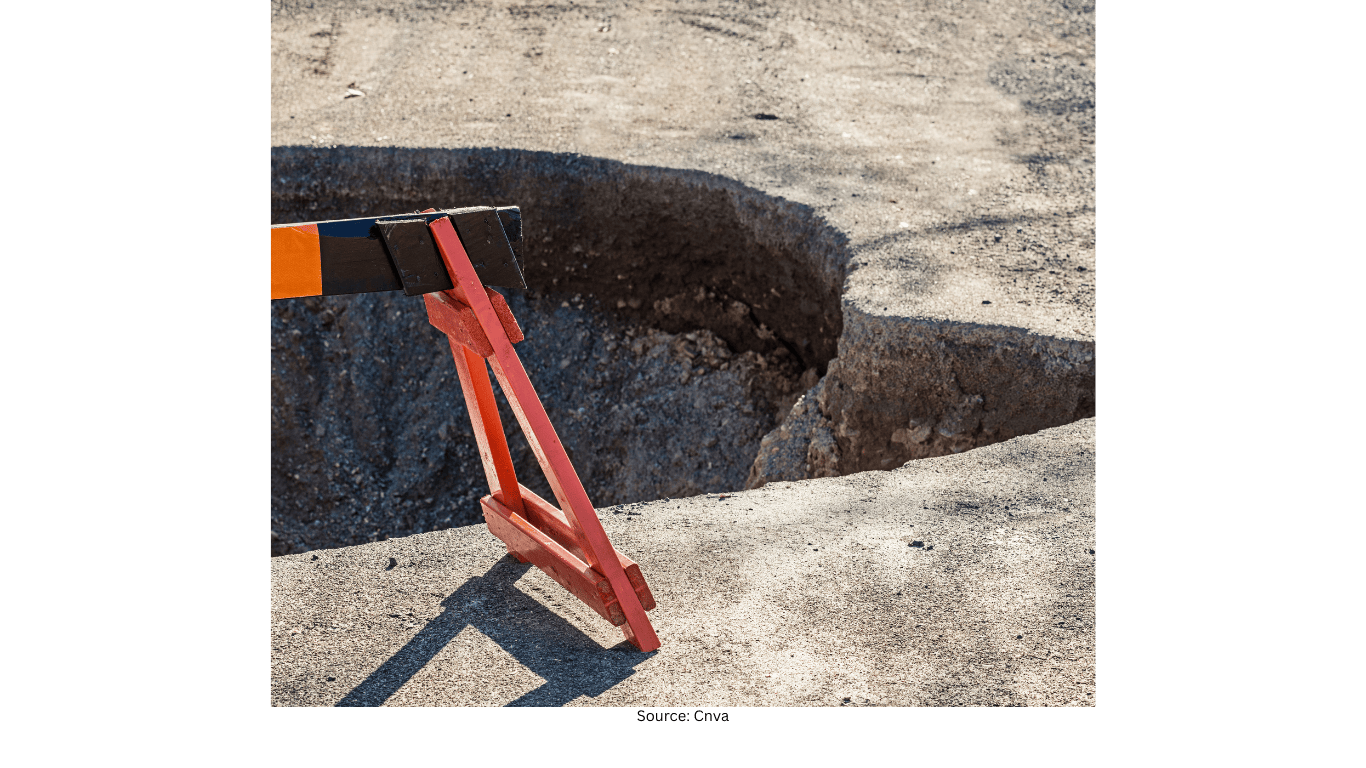
A sudden collapse in a residential area
A large sinkhole opened up beneath a residential street in Jamaica just days after Hurricane Melissa moved through the island. The collapse created a gaping hole in the roadway, changing what had been an ordinary neighborhood street into a hazardous scene that drew immediate attention from the surrounding community.
With the storm’s destructive path still fresh in residents’ minds, the sinkhole became another visible sign of the hurricane’s aftermath. The timing—so soon after the hurricane—added to the sense of unease and uncertainty for people living nearby.
Homes and vehicles left precariously close
The sinkhole’s location under a residential street placed it uncomfortably close to where people live and park. Homes and vehicles were described as sitting precariously near the edge of the opening, underscoring the risk posed by the collapse and the potential for conditions to worsen.
In situations like this, proximity matters: when a roadway gives way, the boundary between public infrastructure and private property can become dangerously thin. The scene in Jamaica highlighted that reality, with the hole’s edges near structures and vehicles that would normally be safely separated from any major ground instability.
Residents gather to witness the damage
Stunned residents gathered around the area to witness what many saw as the storm’s latest terrifying impact. The gathering reflected both concern and disbelief, as people tried to understand the scale of the damage and what it could mean for the neighborhood.
In the days following a major hurricane, communities often remain on alert for additional hazards beyond wind and rain. The appearance of a large sinkhole can intensify that anxiety, especially when it emerges in a residential setting where daily routines—driving, walking, parking, and entering homes—depend on stable ground and intact streets.
How the sinkhole fits into the hurricane aftermath
Hurricane Melissa was described as having carved a destructive path through Jamaica. The sinkhole, appearing shortly afterward, was presented as another severe consequence seen in the wake of the storm. While the hurricane itself may have passed, the impacts on the built environment and on residents’ sense of security can continue.
Storm aftermaths are often defined by a series of unfolding problems rather than a single event. In this case, the sinkhole served as a stark, localized example of how damage can manifest after the initial storm, affecting a specific street and the homes and vehicles nearby.
Why sinkholes in neighborhoods are especially disruptive
A sinkhole under a residential street is not only a physical hazard but also a disruption to everyday life. Streets connect neighbors to schools, shops, work, and emergency services. When a large section of roadway becomes unsafe, the neighborhood can quickly feel cut off or constrained, even if the rest of the area appears intact.
The situation described in Jamaica also illustrates why residents may gather quickly: the damage is highly visible, and the risk feels immediate when the affected area is close to homes and parked vehicles. The combination of a recent hurricane and a sudden collapse can make the event feel unpredictable and frightening.
Key details reported from the scene
- A large sinkhole opened beneath a residential street in Jamaica.
- The sinkhole appeared just days after Hurricane Melissa moved through the island.
- Homes and vehicles were positioned precariously close to the edge of the hole.
- Residents gathered, stunned, to witness the damage and its implications.
- The sinkhole was characterized as a terrifying impact connected to the storm’s destructive aftermath.
What the moment reveals about post-storm risk
The scene of residents looking on at a gaping hole in their street captures an important aspect of hurricane recovery: risk does not always end when the wind dies down. A destructive storm can be followed by additional dangers that emerge with little warning, particularly in places where infrastructure has been stressed.
In Jamaica, the sinkhole’s appearance in a residential area brought those concerns directly to people’s doorsteps. With homes and vehicles near the opening, the damage was not an abstract problem—it was a threat in close proximity, visible and immediate.
A continuing focus on safety and stability
As communities assess hurricane impacts, incidents like this can become focal points for concern because they involve both public safety and personal property. The sinkhole described here stands as a vivid reminder that storms can leave behind hazards that are as alarming as they are unexpected.
For the residents who gathered at the scene, the sinkhole was more than a damaged street. It was a sign of how quickly conditions can change after a major weather event—and how recovery can involve navigating new risks even after the hurricane has passed.