
Snow on Hawaii’s High Peaks: Why It Happens More Often Than Many Expect
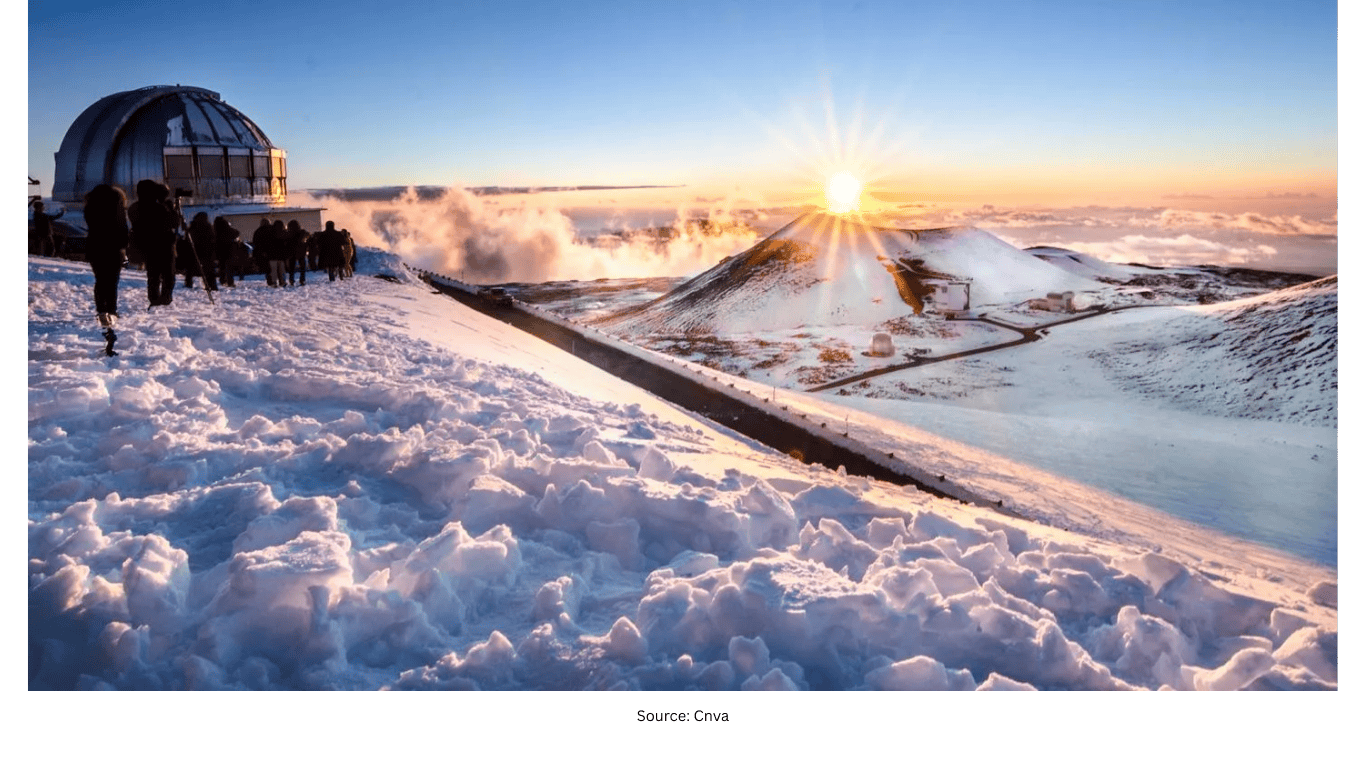
Snow in a Tropical State
Hawaii is often described as a warm, tropical paradise, so the idea of snow on the islands can sound surprising. Yet on the Big Island, it is not uncommon to see snow on the highest volcanic peaks. The key is elevation: the state’s tallest summits rise well above 13,000 feet, and conditions there can be dramatically different from the beaches and lower elevations that most visitors associate with Hawaii.
This contrast becomes especially clear during winter weather events. When storms bring enough moisture and temperatures are cold enough at the summit level, precipitation can fall as snow rather than rain. As a result, accumulating snow is part of the Big Island’s weather story, even while lower elevations may be experiencing very different conditions.
A Recent Example: Winter Storm Warning for Big Island Summits
In one recent event, the National Weather Service issued a winter storm warning for the Big Island summits. The forecast called for 5 to 10 inches of snow, strong winds, and significant rime icing on Mauna Kea and Mauna Loa. The warning was set to remain in effect through Tuesday morning, local time.
Officials cautioned that travel across the summits could be hazardous to impossible during the warning period. While access may be limited in such conditions, summit webcams can provide a view of the changing landscape when snow and ice take hold at the highest elevations.
What Drives Snowfall on Mauna Kea and Mauna Loa?
The storm setup linked to this kind of summit snowfall is often associated with a Kona storm, also known as a Kona low. In this pattern, the same weather system can deliver heavy rain to lower elevations while pushing moisture into the upper slopes and summits of Mauna Kea and Mauna Loa.
These two volcanoes, each exceeding 13,000 feet, are high enough that air temperatures can be cold when storms pass through. Because air temperature usually grows colder with higher altitudes, precipitation that falls as rain in warmer, lower areas can turn to snow at the summit level. In other words, it is not that the entire island becomes wintry; rather, the highest terrain can cross the threshold where snow becomes possible.
Timing: When Snow Is Most Likely—and When It Can Still Surprise
Snow occurs most often at Hawaii’s highest elevations during the cooler months between October and April. That seasonal window aligns with the time of year when colder air aloft is more common, increasing the odds that storms will produce snow on the summits.
However, summit snow is not strictly limited to winter. It can happen at any time of year when the right combination of moisture and cold temperatures is present. A notable example is a dusting of snow observed at Mauna Kea in July 2015, illustrating that even mid-summer does not completely rule out the possibility of snow at the highest elevations.
Beyond Snow: Wind, Ice, and Severe Conditions
When winter weather impacts the Big Island summits, the hazards are not limited to snowfall alone. Forecasts and warnings may also highlight strong winds and rime icing. Rime icing forms when supercooled water droplets freeze on contact with surfaces, creating ice buildup that can add to dangerous travel conditions and reduce visibility.
In some past events, blizzard warnings have even been issued for the summits. That detail underscores how severe conditions can become at high elevation, even in a state best known for mild weather at sea level.
What This Means in a National Context
Because Hawaii’s peaks see snow a few times each year, the state belongs on the list of places in the United States where accumulating snow can occur. With that in mind, it follows that all 50 states can see accumulating snow under the right circumstances.
This perspective can reshape what people consider “unusual” snowfall. If snow occurs on Hawaii’s highest terrain multiple times a year, then rarity depends on where snow is least likely to accumulate. In that comparison, Florida is suggested as the most unusual state to see accumulating snow.
Key Takeaways
Snow on Hawaii’s Big Island is not uncommon on the highest volcanic summits, particularly Mauna Kea and Mauna Loa.
Winter storm warnings can be issued for these summits, with forecasts that may include several inches of snow, strong winds, and significant rime icing.
Kona storms (Kona lows) can bring heavy rain to lower elevations while directing moisture into the high terrain where temperatures are cold enough for snow.
Snow is most frequent between October and April, but it can occur at any time of year, including rare summer events.
Travel across the summits can become hazardous to impossible during these events, reflecting how quickly conditions can turn severe at high elevation.
Ultimately, snow in Hawaii is a reminder that geography matters as much as latitude. While the islands’ lower elevations often fit the familiar image of tropical warmth, the Big Island’s highest peaks occupy a different climate zone—one where winter storms can create a landscape that looks far removed from the beaches below.