
Flooding and Ice Damage Hit Cheboygan County, Michigan, as Record Weather Drives Unusual Destruction
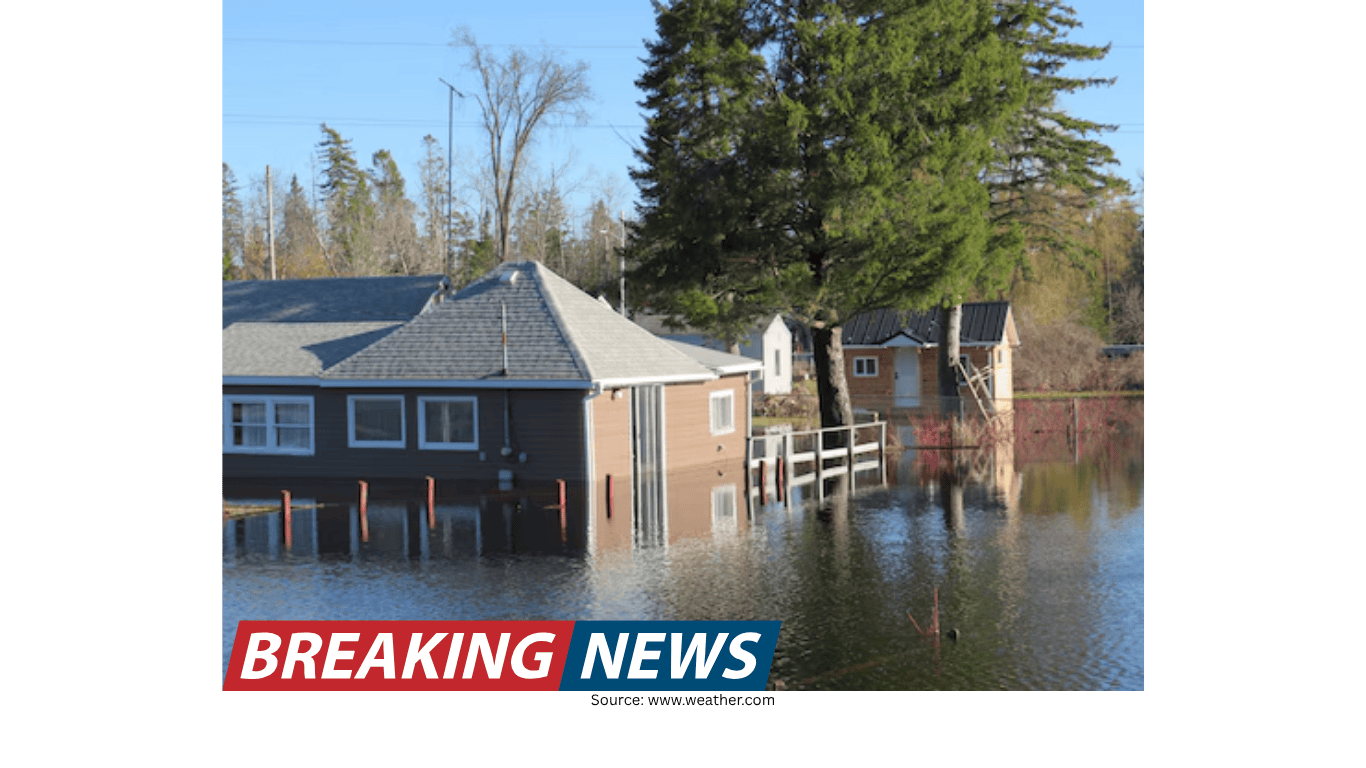
A severe scene in northern Michigan
In Cheboygan County, Michigan, residents and property owners are confronting damage that, by many accounts, is difficult to process. Flooding has swamped homes and vacation cabins, leaving waterlogged interiors and turning familiar properties into disaster zones. Yet the destruction reported along Black Lake has added a striking and unsettling dimension: ice sheets have pierced through homes, creating scenes that appear almost surreal.
Videos and images circulating online capture the scale of what has happened—floodwaters pushing into structures and ice breaking through walls and other parts of buildings. For families tied to the area, the emotional shock has been compounded by the way the news arrives. Some are learning that their homes have been obliterated not through an in-person visit, but through social media posts and shared footage.
The result is a story that combines two kinds of harm at once: widespread flooding across the county and an unusual form of structural destruction along the lakeshore, where ice has acted not as a distant seasonal feature but as a force capable of tearing into buildings.
Flooding across Cheboygan County
Flooding is the central driver of the crisis described across Cheboygan County. Homes and vacation cabins have been swamped, suggesting water levels rose high enough to enter living spaces and overwhelm properties designed for seasonal use as well as year-round residence. Flooding of this kind can affect structures in multiple ways at once—soaking floors and walls, damaging personal belongings, and leaving behind debris and mud even after water recedes.
In many communities, vacation cabins sit close to shorelines or in low-lying areas, where changing water levels can quickly turn into a threat. When flooding spreads across a county, the impact can be uneven: some properties may see shallow water intrusion while others experience deeper, more destructive inundation. The reports from this event emphasize that the flooding has been substantial enough to swamp buildings, indicating a high level of disruption for property owners and residents.
As footage shows the extent of the water and damage, it also underscores how quickly conditions can shift when record weather is involved. Flooding events tied to unusual or record-setting weather can catch people off guard, leaving little time to move items, protect structures, or even get to a property before access becomes difficult.
Black Lake’s surreal damage: ice sheets piercing homes
While flooding has affected the broader area, the destruction along Black Lake stands out for its unusual and visually jarring nature. Ice sheets have been reported piercing through homes—an image that is both heartbreaking and almost unbelievable. This is not merely ice accumulating on the ground or forming along the shore; it is ice acting with enough force to break into structures.
The phrase “pierced through homes” conveys direct physical intrusion, as if slabs of ice were driven into walls and interiors. For anyone familiar with winter landscapes, ice is often associated with slick roads, frozen surfaces, and cold-weather hazards. Here, it becomes something else entirely: a destructive element capable of tearing through the built environment.
This kind of damage also helps explain why observers describe the scene as surreal. Flood damage, while devastating, is widely recognized as a risk during heavy rain or rapid changes in water levels. Ice sheets breaking into homes is less commonly encountered, and the images can feel disorienting because they challenge expectations of what “ice” typically does near residential buildings.
Along Black Lake, the combination of flooding conditions and ice movement appears to have produced a particularly severe outcome. Videos of the destruction show why the event has drawn attention: it is not only the volume of water, but also the behavior of ice under extreme conditions that has left structures shattered.
Families discovering loss through social media
Beyond the physical destruction, the human experience of this event is marked by the way information is spreading. Families are finding out that their homes have been obliterated over social media. That detail points to a modern layer of disaster: the first confirmation of loss may come through a shared video, a post from a neighbor, or footage circulating online rather than a direct call or an in-person assessment.
Learning about damage this way can intensify the sense of helplessness. When someone sees their property in a video—flooded, broken, or pierced by ice—there is often no immediate way to verify what remains, what can be saved, or when it will be possible to access the site. The distance between the viewer and the scene can make the loss feel both unreal and unavoidable at the same time.
The circulation of images also reflects how disasters are documented today. Videos can provide rapid situational awareness, showing the scale of flooding and the nature of the ice damage. At the same time, they can deliver painful news abruptly, without the context or support that might come with a more personal notification.
For communities affected by flooding, the online spread of information can become a lifeline—helping people understand which areas are hardest hit—but it can also become the medium through which heartbreak arrives first.
Record weather as the backdrop
The flooding and destruction are linked to record weather described as causing the flooding. While the specifics of the records are not detailed here, the emphasis on record conditions signals that the event is not being treated as routine seasonal flooding. Record weather implies an extreme or unusual pattern that has pushed conditions beyond what many residents and property owners would expect.
When record weather drives flooding, the consequences can cascade. Water levels can rise rapidly, drainage systems can be overwhelmed, and shorelines can behave unpredictably. In lake environments, shifting water and ice conditions can interact in ways that amplify damage. The reported combination—flooding that swamps buildings and ice sheets that pierce structures—fits the idea of a rare alignment of factors occurring under extreme weather circumstances.
Record weather also complicates preparation. People tend to plan around what they have seen before: typical spring melt, a heavy rainstorm, a windy day on the lake. Records, by definition, exceed those reference points. That gap between expectation and reality is one reason the images can appear almost unbelievable: the event has surpassed the normal range of experience for many people in the area.
In the aftermath, understanding that record weather played a role may help explain why the damage looks the way it does. It does not lessen the loss, but it provides context for why flooding spread and why ice behaved with such destructive force.
Why the images feel “heartbreaking”
Descriptions of the footage emphasize the emotional weight: the images are heartbreaking. That reaction is rooted not only in the physical wreckage but also in what homes and cabins represent. A home is shelter, stability, and memory. A vacation cabin can be a family gathering place, a link to childhood summers, or a long-term investment built over years. Seeing these places swamped by floodwaters is painful; seeing them pierced by ice adds a further sense of shock.
In disasters, certain visuals carry particular power. Water inside a living room, debris scattered across a yard, or a wall torn open by a natural force can all convey vulnerability. In this case, ice—often seen as part of a quiet winter landscape—appears as a destructive weapon. That contrast can make the damage feel especially cruel and difficult to comprehend.
The heartbreak also comes from the suddenness implied by the accounts. Families are discovering destruction through social media, suggesting that the situation evolved quickly enough that not everyone had time to check on properties or intervene. When loss is discovered after the fact, it can feel final and irreversible, even before an official assessment is possible.
For those watching from outside the region, the footage can still resonate because it shows how quickly familiar surroundings can become unrecognizable under extreme conditions.
What the videos show—and what they cannot
Videos and images are central to how this event is being understood. They show the destruction and the record weather’s consequences, offering a direct look at flooded structures and ice damage along Black Lake. In a fast-moving situation, visuals can communicate more than words: the height of water, the extent of debris, the angles and size of ice sheets, and the scale of structural failure.
At the same time, videos cannot capture everything. They may not show the full perimeter of damage, the condition of foundations, or the hidden impacts inside walls and floors. They may not convey the personal losses inside a home—photographs, keepsakes, and everyday items that matter deeply to families. And they cannot fully represent the stress of uncertainty for people who are still trying to determine what has happened to their property.
Still, the footage serves a crucial role: it documents the reality that flooding has swamped homes and cabins, and it confirms the unusual nature of the destruction along Black Lake, where ice sheets have pierced through homes. For many families, these visuals are not just news—they are evidence of what they must now face.
A community confronting multiple hazards at once
Cheboygan County’s situation illustrates how multiple hazards can converge. Flooding alone can be devastating, particularly when it reaches into living spaces. Ice damage alone can be dangerous and costly. Together, they create a scenario in which the environment is not simply wet or cold, but actively destructive in different ways across nearby areas.
The countywide flooding suggests broad impact, while the lakeside ice destruction suggests localized extremes that may affect certain shoreline properties more severely. This combination can complicate response and recovery, because needs vary from place to place. Some residents may be dealing primarily with water intrusion and cleanup, while others face structural breaches caused by ice.
The emotional toll also varies. For some, the shock may come from seeing water where it has never been before. For others, it may come from seeing ice inside a home—an image that defies normal expectations. For many, it is the realization that a familiar place is gone or fundamentally changed.
As the community processes the damage, the videos and shared images become part of a collective record of what happened during this period of record weather.
Key details reported from the scene
Flooding across Cheboygan County, Michigan has swamped homes and vacation cabins.
Along Black Lake, ice sheets have pierced through homes, creating unusual and severe structural damage.
Families are learning that their homes have been obliterated through social media posts and shared videos.
The flooding is linked to record weather conditions described as causing the event.
Videos show the destruction and highlight the scale and nature of the damage.
Looking ahead: documenting loss while understanding the conditions
In the immediate aftermath of disasters, communities often move through overlapping phases: shock, documentation, and the first steps toward understanding what happened. In Cheboygan County, the documentation is already widespread, with videos and images offering a stark view of flooded homes, swamped vacation cabins, and ice sheets piercing structures along Black Lake.
Understanding the role of record weather is part of making sense of the event. Extreme conditions can produce outcomes that look unreal until they are seen directly. Here, the combination of flooding and ice-driven destruction has created scenes that are described as both heartbreaking and almost unbelievable.
For families, the path forward begins with confirming the extent of damage and grappling with what has been lost—sometimes first encountered through a social media post. For observers, the footage serves as a reminder that weather can reshape communities quickly, and that the boundary between land, water, and ice can become dangerously unstable under record conditions.
What remains clearest is the human cost behind the images: homes and cabins swamped, structures pierced, and families absorbing life-changing news in real time as the videos spread.