
Springs Fire Near Lake Perris Grows to 4,100 Acres as Gusty Winds Complicate Containment
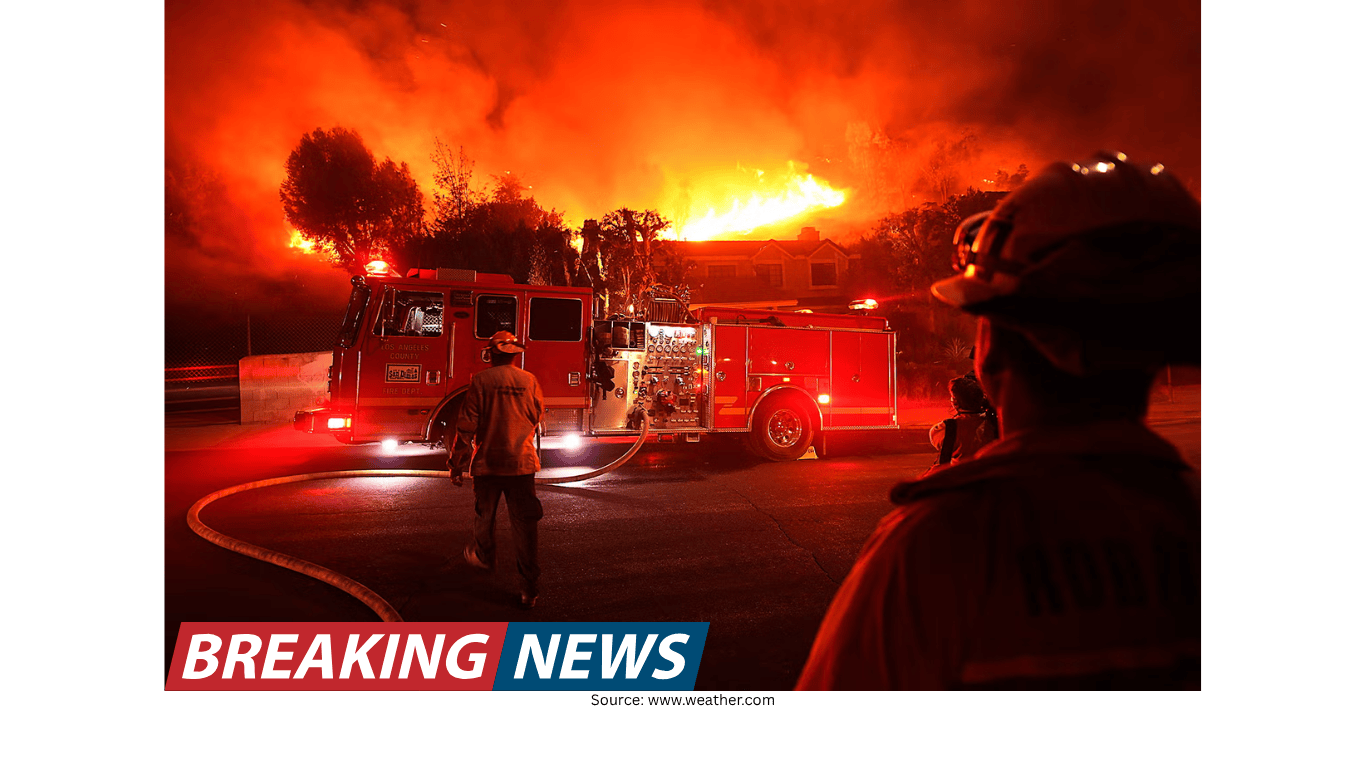
Fire activity near Lake Perris prompts evacuations and closures
The Springs Fire has burned more than 4,100 acres near Lake Perris in Riverside County, California, after igniting Friday morning. As crews continue to work the incident, officials have reported that the fire is only 10% contained, underscoring the challenge of slowing its spread under difficult weather conditions.
Strong winds have been a defining factor in the early stages of the response. Wind gusts up to 50 mph have been cited as complicating firefighting efforts, a dynamic that can push flames quickly across terrain, reduce the effectiveness of suppression tactics, and make it harder to establish and hold containment lines.
In the area east of Moreno Valley, evacuations have been issued as the fire burns nearby. Valley View High School has been designated as a temporary shelter for those displaced, providing a centralized location for residents seeking assistance while the situation remains active.
Containment remains limited as crews face gusty conditions
Containment at 10% indicates that only a small portion of the fire’s perimeter has been secured. While containment does not necessarily reflect the overall intensity of the blaze, it is a key measure of progress for firefighters attempting to prevent further growth. With gusts reaching up to 50 mph, the task becomes more complex, as shifting winds can cause rapid changes in fire behavior.
Wind can also affect visibility and air operations, and it may influence where and when aircraft can safely support ground crews. Even when aircraft are available, gusty conditions can limit the windows in which helicopters can operate effectively. This makes coordination between ground resources and aerial support particularly important.
At this stage, officials have not announced a cause for the fire. The cause remains under investigation, a standard process that can take time as investigators work to determine how the incident started.
Large response mobilized with engines and helicopters
More than 250 fire personnel are battling the Springs Fire, using a combination of engines and helicopters. This mix of resources reflects the need to address multiple priorities at once: protecting communities, supporting evacuations, and working to slow the fire’s spread.
Engines are typically used for structure protection and perimeter work where access allows, while helicopters can assist by dropping water and supporting tactical operations from above. Together, these resources help crews respond to changing conditions, especially when wind gusts can quickly alter the direction and speed of the fire.
Officials have reported no deaths in connection with the Springs Fire. As the response continues, safety remains a central concern for both residents and firefighters, particularly given the combination of active fire behavior and strong winds.
Evacuations issued east of Moreno Valley
Evacuation orders have been issued east of Moreno Valley, reflecting the potential risk posed by the fire’s growth and the uncertainty introduced by wind-driven conditions. Evacuations are a precautionary measure designed to move people out of harm’s way before conditions worsen or routes become limited.
Valley View High School is serving as a temporary shelter. In fast-moving incidents like this, shelters can become essential hubs for residents who need a safe place to stay, information updates, or support services while they are away from their homes.
For evacuees, the situation can be fluid, with changing fire activity and shifting winds affecting decisions. The presence of a designated shelter provides a clear option for those who must leave quickly and may not have an immediate alternative.
Poor air quality leads to campus closure
Beyond the immediate threat of flames, the Springs Fire is also affecting air quality in the region. Moreno Valley College closed its main campus due to poor air quality, highlighting how wildfire impacts can extend beyond evacuation zones.
Smoke and fine particles can travel well beyond the fire perimeter, and air-quality concerns can prompt closures and operational changes for schools and other institutions. The decision to close a campus reflects an effort to reduce exposure for students, faculty, and staff while conditions remain unhealthy.
Air-quality impacts are often a key part of wildfire response planning, especially when a fire grows quickly and winds spread smoke across nearby communities. Even residents who are not under evacuation orders may experience disruptions as smoke affects daily routines and outdoor activity.
What is known so far
The Springs Fire has burned more than 4,100 acres near Lake Perris in Riverside County, California.
The fire ignited Friday morning and is reported to be 10% contained.
Wind gusts up to 50 mph are complicating firefighting efforts.
Evacuations have been issued east of Moreno Valley, with Valley View High School serving as a temporary shelter.
Moreno Valley College closed its main campus due to poor air quality.
More than 250 fire personnel are battling the fire with engines and helicopters.
The cause remains under investigation.
No deaths have been reported.
How wind shapes wildfire response
The reported wind gusts up to 50 mph are significant in the context of wildfire suppression. Wind can accelerate the spread of flames, carry embers ahead of the main fire, and increase the likelihood of spot fires. These factors can force firefighters to adjust strategy, sometimes prioritizing protection of life and property over direct perimeter attack when conditions become too hazardous.
When winds are strong, a fire’s behavior can become more unpredictable. Even a brief surge in wind can cause a fire to run, increasing the urgency of evacuations and the need for rapid situational updates. In such cases, containment progress may be slow, not necessarily due to lack of effort, but because safe opportunities to build and hold lines can be limited.
Wind can also affect the movement of smoke, contributing to air-quality impacts that reach schools, workplaces, and neighborhoods. The closure of Moreno Valley College’s main campus due to poor air quality illustrates how smoke can create health and operational concerns even for people who are not directly in the fire’s path.
Community impacts: sheltering, schooling, and daily disruptions
For residents east of Moreno Valley, evacuations represent a major disruption, requiring people to leave homes, gather essential items quickly, and navigate uncertainty about when they can return. The use of Valley View High School as a temporary shelter provides a tangible point of support amid that uncertainty.
At the same time, the closure of Moreno Valley College’s main campus shows how wildfire effects can ripple through the community. Poor air quality can lead to canceled classes, altered schedules, and broader changes in daily activity, particularly for those who may be sensitive to smoke.
These impacts often occur alongside the ongoing work of firefighters and emergency officials, who must balance response operations with public communication and support services. As the Springs Fire continues to burn, the combination of evacuation needs and air-quality concerns remains part of the overall picture.
Ongoing response and investigation
With more than 250 fire personnel engaged and resources including engines and helicopters, the response to the Springs Fire remains active. The current containment figure of 10% indicates that significant work lies ahead, particularly if wind gusts continue to challenge operations.
Officials have stated that the cause of the fire remains under investigation. Determining cause is a separate process from suppression, and it can continue even as crews focus on containing the blaze and supporting affected communities.
For now, the key developments remain the fire’s size—more than 4,100 acres—its limited containment, the role of strong winds, and the immediate community measures in place, including evacuations, sheltering at Valley View High School, and the closure of Moreno Valley College’s main campus due to poor air quality.