
Oceans, Heat and the Rising Stakes for Extreme Weather
Oceans as Earth’s main heat reservoir
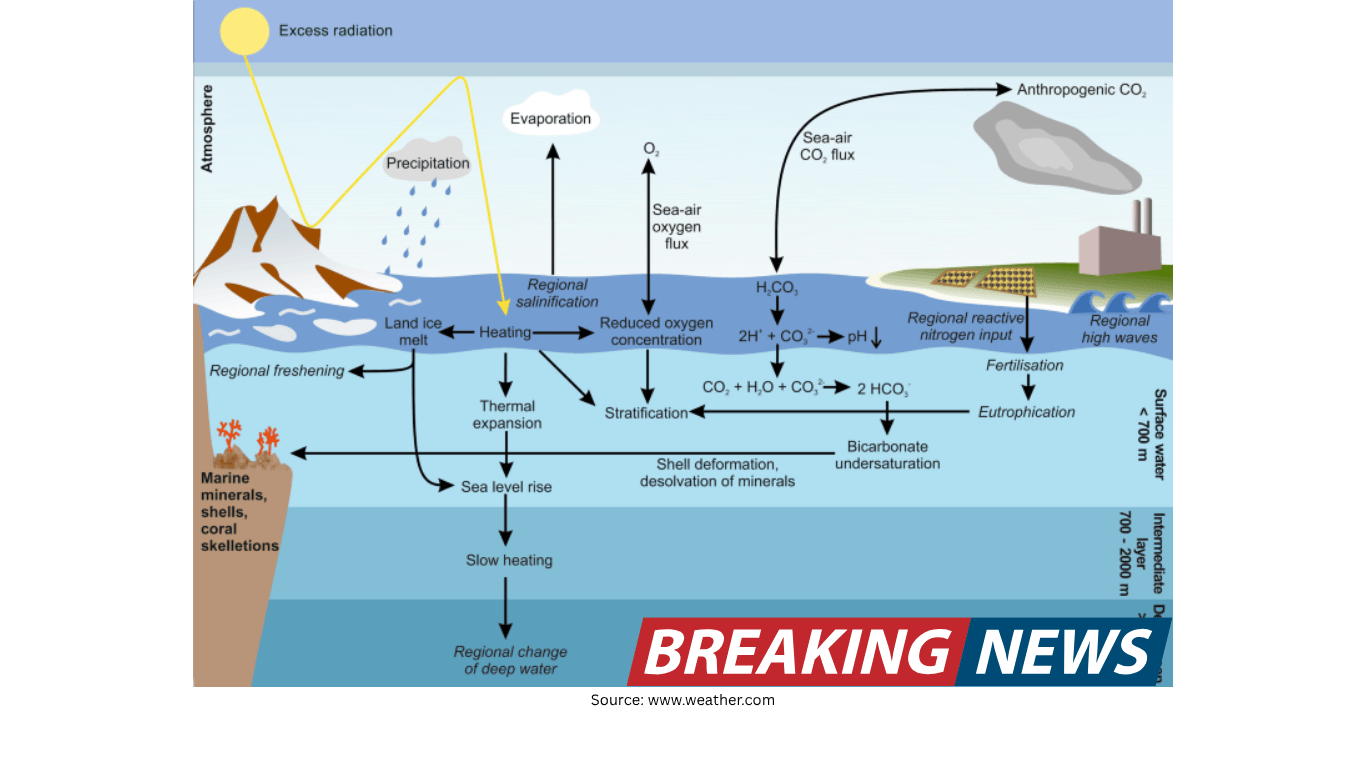
A new study has found that Earth’s oceans absorbed more heat than ever before in 2025. While the atmosphere often gets the most attention in day-to-day weather discussions, the oceans act as the planet’s largest heat storage system. When ocean waters take in and retain more heat, that energy does not simply stay out of sight. It can influence the conditions above the surface and, in turn, affect weather patterns that people experience on land.
The study’s central point is straightforward: record heat absorption in the oceans means more energy is being stored in the Earth system. That matters because ocean heat can “supercharge” the atmosphere—an idea that captures how additional heat can raise the potential for stronger or more disruptive weather events. In practical terms, the oceans are not just a backdrop to the forecast; they can be a key driver of what happens next.
What it means when oceans absorb more heat
Heat absorption is not just a statistic. It is a signal about how much energy the oceans have taken up and are holding. When the oceans absorb more heat than in previous years, the amount of energy available to interact with the atmosphere increases. The study described this as a factor that can aid extreme weather across the world.
In weather terms, “more energy” can translate into an atmosphere that is primed to support more intense outcomes. The study’s language points to a broad global connection rather than a single region or one type of storm. The takeaway is not that every day becomes extreme, but that the background conditions can become more favorable for extremes when they develop.
This also helps explain why ocean heat is increasingly discussed alongside forecasts and climate-related assessments. The ocean’s ability to absorb heat is a core part of how the planet redistributes energy. When that absorption reaches record levels, it raises questions about how much additional energy is available to influence weather systems.
How ocean heat can “supercharge” the atmosphere
The study’s description that ocean heat is “supercharging” the atmosphere is a concise way to describe a complex relationship. The ocean and atmosphere constantly exchange heat and moisture. When the ocean holds more heat, it can affect the air above it—supporting conditions that can help weather systems strengthen.
This does not mean ocean heat alone “creates” every extreme event. Weather is shaped by many moving parts. But the study emphasizes that higher ocean heat absorption can aid extreme weather, implying that it can act as an amplifier when other atmospheric ingredients come together.
In other words, the oceans can load the dice. They can increase the amount of energy available to the atmosphere, making it easier for certain weather events to intensify or persist. That is why ocean heat is often treated as a foundational variable: it can influence the starting point from which weather evolves.
Extreme weather as a global consequence
The study links record ocean heat absorption to extreme weather “all over the world.” That phrasing matters. It suggests the impact is not confined to one basin, one coastline, or one season. Instead, the oceans’ role as a global heat sink means changes in ocean heat content can have widespread implications.
Extreme weather is a broad category, and the study’s framing does not limit the consequences to a specific hazard. Rather, it highlights a general mechanism: more ocean heat can energize the atmosphere and support extremes. This global emphasis is also a reminder that oceans connect regions through large-scale circulation and heat distribution.
For the public, the key point is that the ocean’s heat content is not an abstract measure. It is part of the physical environment that influences weather patterns and the potential for high-impact events, wherever they occur.
Why this matters for forecasting
Weather forecasting is often thought of as an atmospheric science—tracking pressure systems, winds, humidity, and temperature in the air. But the study’s findings underscore why forecasters and researchers pay close attention to the ocean as well. If ocean heat content is reaching record levels, it can change the baseline conditions that forecasts build upon.
When the oceans store more heat, they can provide additional energy that weather systems may draw upon. This can affect how forecasters think about the potential intensity of developing events. It can also shape the broader seasonal context in which weather unfolds.
Importantly, the study does not claim that ocean heat makes every forecast worse or guarantees a specific outcome. Instead, it suggests that record heat absorption is a significant factor that can influence the atmosphere and aid extreme weather. For forecasting, that means ocean heat is a variable that can help explain why certain events may become more intense.
What viewers are being shown
Alongside the study’s findings, the accompanying video presentation invites viewers to see “how much heat the oceans are absorbing” and “what the consequences are.” The focus is both quantitative and practical: the scale of heat uptake, and the real-world implications tied to extreme weather.
This approach reflects an important communication challenge. Ocean heat content is not as immediately visible as a thunderstorm or a hurricane track. It is measured and analyzed rather than watched directly. Visual explanations can help bridge that gap by showing the magnitude of the heat absorption and connecting it to outcomes people recognize—such as extreme weather events.
By pairing the study’s conclusion with visuals, the presentation aims to make an invisible driver of weather more understandable. The core message remains: record ocean heat absorption in 2025 is not just a scientific milestone; it is relevant to how the atmosphere behaves and to the risks associated with extreme weather.
Key points at a glance
A new study reports that Earth’s oceans absorbed more heat than ever before in 2025.
The study links this record heat absorption to an atmosphere that can be “supercharged,” increasing the energy available for weather systems.
The additional ocean heat is described as aiding extreme weather around the world.
The accompanying video content focuses on how much heat is being absorbed and what consequences may follow.
Understanding the stakes without overpromising
It can be tempting to interpret any record as a direct predictor of specific disasters. The study’s framing is more measured. It highlights a relationship: oceans absorbing more heat can energize the atmosphere and aid extreme weather. That is a meaningful statement, but it is not the same as saying every region will experience the same impacts at the same time.
Weather remains variable, and extreme events depend on multiple conditions aligning. The value of the study is that it identifies a major background factor—ocean heat—that can influence how the atmosphere behaves. When that factor reaches record levels, it becomes harder to ignore in discussions about risk, preparedness, and forecasting.
For audiences trying to make sense of extreme weather headlines, this provides a useful lens. Instead of viewing each event as isolated, the study points to a shared energy source that can influence many types of weather across the globe.
Why ocean heat is a continuing story
The study’s finding that 2025 set a record for ocean heat absorption suggests an evolving baseline for the planet’s energy balance. Oceans absorbing heat is not a new phenomenon; it is part of how Earth’s system works. What stands out here is the “more than ever before” aspect, which implies the scale of heat uptake is reaching new levels.
That makes ocean heat a continuing story for anyone following weather and its extremes. As researchers track how much heat the oceans absorb, the information can inform how the public understands risk and how meteorologists discuss the potential for high-impact events.
In the simplest terms, the study argues that the oceans are taking in unprecedented amounts of heat, and that this additional energy can feed into the atmosphere in ways that support extreme weather worldwide. That is why ocean heat content is increasingly central to conversations about what drives severe conditions—and why it is being highlighted in explanatory weather coverage.
What to watch for in future updates
Based on the study’s emphasis, future updates on ocean heat absorption can be relevant not only to long-term climate discussions but also to how people interpret the risk of extreme weather. When ocean heat is high, it may indicate that the atmosphere has access to more energy than usual, which can matter when storms and other high-impact systems develop.
The video framing—showing both the amount of heat being absorbed and the consequences—signals that this topic will likely remain a key part of weather education. Ocean heat can be difficult to visualize, but it is increasingly important for understanding the broader conditions that shape extreme weather.
Ultimately, the study’s message is a reminder that the world’s oceans are not separate from the weather story. They are deeply connected to it. When they absorb record amounts of heat, it can change the atmospheric backdrop and raise the stakes for extreme weather across the globe.